HRMATT Presents
Gordon Michael Draper
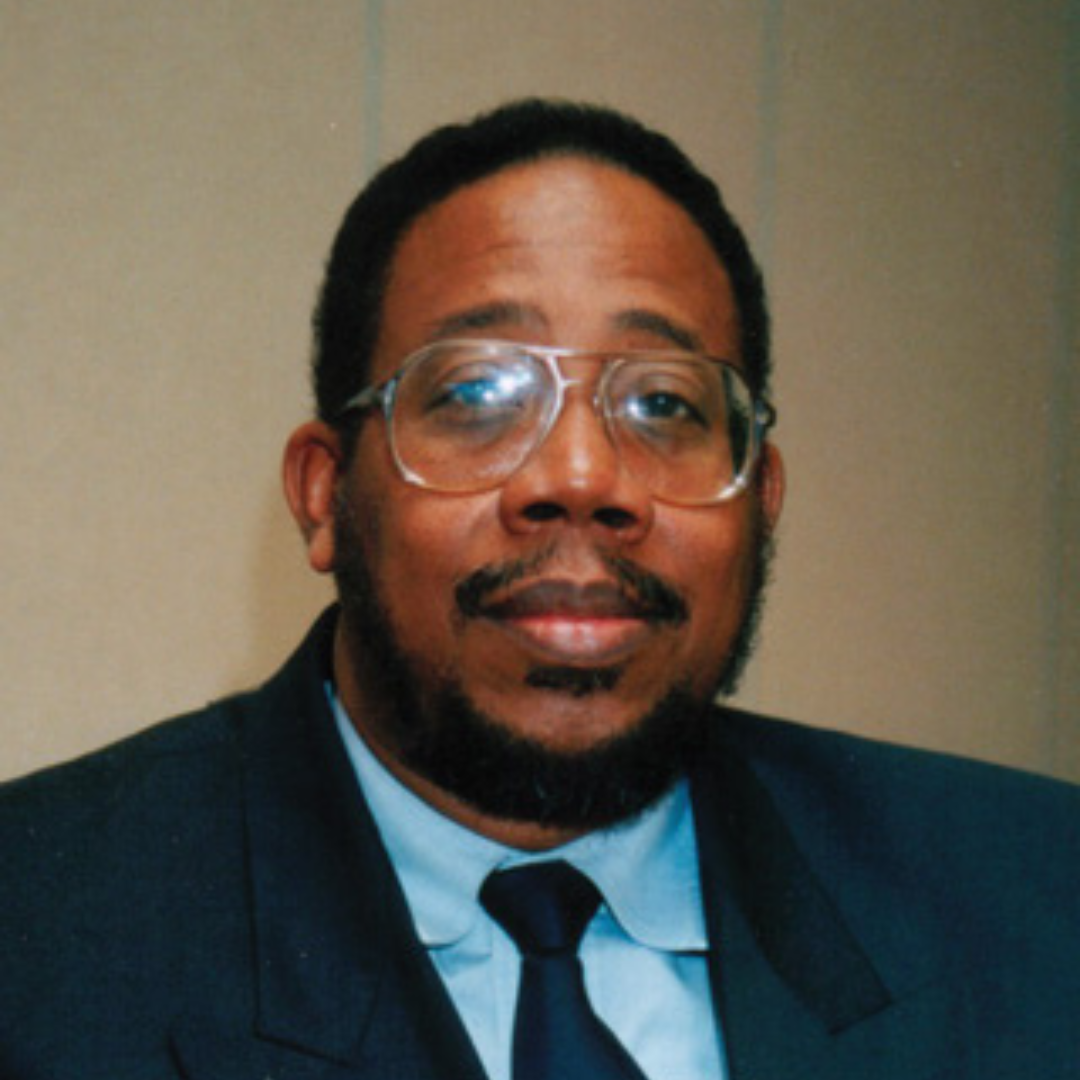
6 May 1949 – 12 August 2004
Scholar. Statesman. Reformer. Visionary Leader.
Gordon Michael Draper was one of the most respected and transformative figures in Caribbean public administration and Commonwealth governance. His career spanned more than three decades across academia, government, consulting, and international development. He was widely recognised as a pioneer of public sector reform in Trinidad and Tobago, a visionary leader within the Commonwealth, and a man of deep intellect, humility, and grace.
To his colleagues, he was a scholar and strategist. To his students, a mentor. To his friends, a gentleman of warmth and integrity. His legacy continues to shape institutions and inspire leaders across the Caribbean, Africa, and the wider world.
Early Life and Education
Gordon Michael Draper was born in Arima, Trinidad and Tobago, on 6 May 1949. His father, Eustace Draper, was originally from Tobago, and the Draper family became well known and deeply loved in the Arima community. Their home, located across from the Arima Savannah, was a place of generosity and gathering. Eustace was remembered for his kindness and community spirit, allowing the local cricket team to store their gear under the family house. Today, Eustace Draper Street in Arima stands as a testament to the family’s contribution to community life and their enduring legacy in the town.
Growing up in this environment of service and humility shaped Gordon’s character. He attended Arima Boys’ Government School, where his intellectual gifts were quickly recognised, and later the Queen’s Royal College (QRC), one of Trinidad and Tobago’s premier secondary schools. There, he distinguished himself as a thoughtful and capable student, admired for both academic excellence and leadership.
He pursued undergraduate studies at the University of the West Indies, where his passion for management, leadership, and governance began to take form. Determined to expand his understanding of organisational systems and leadership, he went on to earn a Master of Business Administration at Cornell University in the United States. His education combined Caribbean insight with global perspective, preparing him for a life devoted to reform and public service.
Academic Leadership and Influence
Education was one of Gordon Michael Draper’s greatest callings. He believed deeply that leadership could be taught and that the transformation of a nation’s institutions began with the transformation of its people. His academic career was both extensive and influential, spanning more than two decades and touching every corner of the Caribbean.
He joined the University of the West Indies in 1976 as a lecturer in the Department of Management Studies at the St Augustine Campus. Over the next twelve years, he became one of the university’s most respected thinkers in management, human resource development, and organisational theory. He guided the evolution of management education during a period when Caribbean economies were restructuring and modernising, ensuring that academic training remained relevant to the region’s development needs.
As Head of the Department of Management Studies, Draper shaped new curricula that integrated theory with the realities of Caribbean institutions. He insisted that students understand not only international management models but also the cultural, social, and political contexts in which they operated. His classes combined intellectual rigour with practical case studies, and he was renowned for his ability to bring abstract concepts to life through lived examples.
In addition to his university teaching, Draper was the founding Executive Director of the Institute of Business, now the Arthur Lok Jack Global School of Business. Under his leadership, the institute was established as a premier centre for executive education and management development in the Caribbean. He developed partnerships with both public and private sectors, introduced professional training programmes for senior executives, and created a space where Caribbean leadership could evolve in response to regional and global challenges.
In recognition of his foundational role and lasting contribution, the school named its central gathering space the Gordon Draper Atrium. The atrium serves as both a symbolic and physical heart of the institution, a place where students, professionals, and leaders meet, exchange ideas, and continue the work he began.
In 2001, Draper joined the Mona School of Business at the University of the West Indies, Jamaica, as a Senior Lecturer and Alister McIntyre Research Fellow. There he taught courses in public sector management, organisational change, leadership development, and governance reform. His research examined how institutions evolve, how leadership culture shapes performance, and how small states can build capacity to meet global demands.
He believed education was not simply about imparting knowledge but about awakening purpose. His students recalled a teacher who challenged them to think deeply, to question assumptions, and to act ethically. Many would later describe him as the most influential mentor of their professional lives.
Draper’s academic work also included collaboration with regional and international institutions. He contributed to Commonwealth Secretariat research projects, CAPAM training manuals, and UWI publications on civil service transformation. His writings on performance management, human resource leadership, and public sector reform were widely cited across the Commonwealth.
Through his teaching, research, institutional leadership, and the institute that honours his name, Gordon Draper helped define the modern discipline of management education in the Caribbean. He bridged the gap between academia and practice, ensuring that every course and programme he touched prepared leaders to serve with competence and conscience.
Private Sector and Consulting Experience
Alongside his academic career, Gordon Draper maintained a distinguished presence in the private sector and consulting world. He viewed management not as a theoretical exercise but as a living discipline shaped by real-world experience. His professional journey demonstrated a rare ability to move fluidly between corporate leadership, national service, and international consultancy.
In the corporate arena, he served as Group Human Resource Manager for McEnearney Alstons Limited, one of Trinidad and Tobago’s largest and most diversified conglomerates. There he modernised human resource systems, introduced structured performance management, and created professional development frameworks that placed people at the centre of organisational success.
He later became Managing Director of Price Waterhouse Management Consultants (Trinidad and Tobago), leading a team of professionals who advised clients across the Caribbean on organisational restructuring, strategy, and transformation. Under his leadership, the firm became a trusted partner to both private corporations and public institutions seeking to improve governance, efficiency, and results-driven management. His work emphasised the importance of aligning strategic goals with human capability and cultural values.
Beyond his corporate leadership, Draper was a sought-after consultant and advisor to governments, multilateral agencies, and regional organisations. Over three decades, he completed assignments in more than twenty-five countries, helping to shape reform agendas and build institutional capacity throughout the Caribbean, Africa, and the wider Commonwealth.
His consulting projects included work with the Commonwealth Secretariat, CAPAM, CARICOM, UNDP, CIDA, DFID, and numerous ministries across the region. He designed and delivered programmes in public sector reform, leadership development, institutional strengthening, and performance-based management.
Among his major contributions were:
- Development of national reform strategies focusing on decentralisation, human resource renewal, and accountability frameworks.
- Design of leadership training programmes for senior public officials, equipping them to lead with competence and integrity.
- Advisory roles on governance and organisational change in emerging and transitional economies.
- Facilitation of cross-sector partnerships, recognising that modern governance thrives on collaboration between public institutions, private enterprises, and civil society.
Known for his intellect, diplomacy, and calm authority, Draper approached every assignment with humility and respect for local context. He believed that true reform could not be imported; it had to be co-created. His clients valued not only his technical expertise but his human insight, his ability to listen deeply, build consensus, and translate ideas into actionable change.
Through his leadership at Price Waterhouse and his extensive consulting practice, Gordon Draper helped reshape how organisations thought about strategy, structure, and people. He demonstrated that excellence in management was inseparable from ethical leadership and that effective governance begins with developing human potential.
National Service and Ministerial Leadership
Gordon Michael Draper’s appointment to Cabinet in December 1991 marked a defining chapter in his career and in the evolution of Trinidad and Tobago’s public service. He served with distinction as Minister in the Office of the Prime Minister, Minister of Public Administration and Public Information, Minister of Foreign Affairs, and Acting Minister of National Security.
His time in government came at a pivotal moment when the nation faced growing demands for modernisation, efficiency, and accountability. Draper’s academic and professional background made him uniquely suited to lead this transformation. He brought to government a clear vision of reform built on principles of integrity, professionalism, and service to citizens.
As Minister of Public Administration, he spearheaded one of the most ambitious public sector reform programmes in Trinidad and Tobago’s history. He introduced strategic human resource management, decentralised decision-making, and modern performance systems across ministries and agencies. His reforms focused on improving institutional effectiveness, morale, and citizen-centred service.
In his capacity as Minister of Foreign Affairs, Draper represented Trinidad and Tobago with distinction in regional and international forums. He was known for his diplomatic skill, thoughtful negotiation, and ability to build consensus on complex issues affecting small island developing states. His approach reflected his belief that foreign policy must serve national development and strengthen international cooperation.
As Minister in the Office of the Prime Minister, he played a key coordinating role in government, ensuring that strategic policies were aligned and implemented effectively. He also served as Acting Minister of National Security during periods of transition, managing sensitive national matters with calm judgement and discretion.
Throughout his ministerial career, Draper was guided by a simple but profound conviction: that the strength of a nation lies in the quality and integrity of its institutions. He worked tirelessly to modernise public administration, enhance transparency, and build a culture of ethical leadership across government.
In 1995, Draper was elected Member of Parliament for Port of Spain North / St Ann’s West in the Fifth Republican Parliament. In Parliament, he continued to advocate for institutional strengthening, people-centred governance, and a responsive public service aligned with national goals.
Across the political spectrum, his contributions were recognised for their professionalism, intellect, and vision. Prime Minister Patrick Manning described him as “a man who brought a high level of professionalism, enthusiasm, and vibrancy to all of his endeavours,” acknowledging his integral role in modernising the public service. His policies laid the foundation for many of the human resource and governance frameworks that endure today.
Commonwealth and International Leadership
Beyond the Caribbean, Gordon Draper was a towering figure in the Commonwealth. He was a founding architect of the Commonwealth Association for Public Administration and Management (CAPAM) and was elected as its first President. His vision and leadership helped establish CAPAM as a platform for advancing excellence, ethics, and innovation in public administration across member states.
Under his guidance, CAPAM became a network where practitioners, academics, and policymakers could exchange ideas and strengthen the capacity of public institutions. Draper championed programmes focused on leadership development, accountability, and institutional reform, believing that good governance was the foundation for national progress.
He worked closely with colleagues such as Art Stevenson, who later served as Executive Director of CAPAM. Their partnership was built on shared ideals of service, professionalism, and respect for the people behind public institutions. Together, they created training frameworks, research initiatives, and leadership programmes that reached governments across Africa, Asia, and the Caribbean. Art Stevenson often recalled Gordon’s calm intellect, generosity, and collaborative spirit, describing him as a guiding light within the CAPAM community.
Following his passing, CAPAM honoured his legacy by establishing the Gordon Draper Award for Public Sector Leadership, recognising individuals who embody his principles of integrity, vision, and service. The award continues to reflect the values he championed throughout his career.
Draper also worked extensively with the Commonwealth Secretariat, leading missions and advisory programmes on governance reform, public sector restructuring, and leadership capacity. His work took him across the Commonwealth, with a particular focus on Africa, where he played a role in strengthening institutional frameworks during periods of transition and development.
Among all the countries he served, South Africa held a special place in his heart. He visited the country at least thirty-three times, forming deep bonds with colleagues and institutions as the nation rebuilt its public service after apartheid. He saw in South Africa’s journey a reflection of his own convictions: that leadership, grounded in ethics and human dignity, could transform societies.
He was a frequent keynote speaker at international conferences and Commonwealth fora, where he argued that reform must be rooted in local context, respect for culture, and the empowerment of people. His ideas on performance management, capacity building, and ethical leadership influenced policy frameworks across multiple regions.
Through CAPAM, the Commonwealth Secretariat, and his countless missions, Gordon Draper helped shape a generation of leaders and a global movement toward better governance. His contributions continue to be studied and celebrated across the Commonwealth.
Character, Family, and Legacy
Beyond his professional accomplishments, Gordon Draper was deeply loved for who he was. He was gentle, wise, and thoughtful. His presence inspired confidence, his words carried weight, and his kindness left a lasting impression on everyone he met. He was admired not only for his intellect but for his humility and humanity.
He was a devoted husband to Chela Bocas-Draper, and a loving father to Natasha, Jamila, and Lauren. His family was the centre of his world and the source of his joy and balance. Though his life was filled with global responsibilities, he remained grounded in his love for home, family, and community.
He was also remembered fondly by friends across the Caribbean. As Justin Sobion wrote in tribute, Draper shared with his father, Keith Sobion, a deep friendship and intellectual bond, engaging in rich conversations about governance and nation-building even after both had left politics. Those who knew him recall his humour, generosity, and unwavering belief in the potential of people.
Gordon Draper passed away suddenly in London on 12 August 2004 while returning from a business trip to South Africa. His passing was felt deeply across the Commonwealth. Tributes poured in from colleagues, governments, and institutions that had been shaped by his vision and leadership.
He was survived by his wife, Chela, his daughters Natasha, Jamila, and Lauren, and his extended family, who carry forward his legacy with pride.
Today, his life continues to be celebrated through multiple honours, including the Gordon Draper Atrium at the Arthur Lok Jack Global School of Business, the Gordon Draper Award for Public Sector Leadership through CAPAM, and the Gordon Draper Award for Excellence at HRMATT. His influence endures in the institutions he built, the students he taught, and the countless professionals he inspired.
Enduring Impact
Gordon Michael Draper’s life embodied the belief that leadership is service and that true reform begins with integrity and compassion. He was a bridge between theory and practice, between government and people, and between nations and ideas. His vision helped professionalise human resource management, transform public administration, and inspire a generation of leaders across the Caribbean and beyond.
His name remains synonymous with excellence, wisdom, and humility. His work continues to guide institutions and inspire reformers. His legacy reminds us that one life, lived with purpose, can transform a nation.
Gordon Michael Draper
A life of intellect, integrity, and service.
Connect With Us
We’re here to assist with your professional needs to help you grow
Contact Us
Connect With Us!
Get in touch with us to schedule a membership consultation meeting. We’re here to assist with your career goals and help you grow
Or You May Call Us For An Appointment